


ASPIRE pivotal IDE study results demonstrated PearlMatrix achieved superior clinical success and superior time-to-fusion at 24 months compared to local autograft. The rigor of the ASPIRE study reflects unmatched clinical design and results including:
– More than twice as many patients fused at 6 months
– Approximately 60% high-risk patients
– As safe as local autograft
WESTMINSTER, Colo., Dec. 17, 2025 /PRNewswire/ — Cerapedics Inc., a global, commercial-stage orthopedics company dedicated to redefining the path to bone repair, today announced the publication of two back-to-back papers in Spine detailing 24-month outcomes from the ASPIRE pivotal Investigational Device Exemption (IDE) study of PearlMatrix P-15 Peptide Enhanced Bone Graft. These results demonstrated PearlMatrix achieved statistically superior clinical success and statistically faster time-to-fusion compared to local autograft when used in single-level transforaminal lumbar interbody fusion (TLIF) surgery in adult patients with degenerative disc disease (DDD).
ASPIRE was a prospective, single-blinded, multicenter, randomized, controlled pivotal IDE study, that evaluated the safety and efficacy of PearlMatrix compared to use of local autograft bone graft when applied in TLIF surgery. The ASPIRE study involved 33 U.S. participating centers and enrolled 293 patients, including approximately 60 percent of patients that were considered high-risk for non-union (i.e., patients with type 2 diabetes, BMI ≥ 30 and/or nicotine users).
“The publication of the ASPIRE study results in Spine underscores the strength of our clinical data for PearlMatrix as the first and only drug-device spinal bone graft product proven to accelerate lumbar fusion in patients with degenerative disc disease,” said Valeska Schroeder, PhD, Chief Executive Officer of Cerapedics. “Cerapedics is dedicated to robust human clinical evidence to help surgeons provide safe and effective treatment options for their patients.”
Superior Clinical Success and Significantly Higher Fusion Rates
The first paper published in Spine evaluated the safety and efficacy of PearlMatrix compared to local autograft when applied in TLIF surgery using the primary outcome of Composite Clinical Success (CCS) at 24 months, which is comprised of five components: fusion, function gains (ODI), neurological success, no serious device-related adverse events, and no index-level secondary surgical interventions. To be considered an overall clinical success for an individual patient, all five components must be met.
PearlMatrix met the primary endpoint of CCS at 24 months and further demonstrated statistical superiority versus local autograft in CCS. Additionally, PearlMatrix was associated with substantially higher fusion rates compared to local autograft at 24 months. There were no significant differences between treatment groups with respect to ODI improvement, neurological deficits (motor and sensory), and serious device-related adverse events (AEs).
“The ASPIRE study not only demonstrated higher fusion rates for PearlMatrix, as compared to local autograft in TLIF procedures, but it did so in a patient population reflective of typical higher risk patients,” said James S. Harrop, M.D., Professor, Neurological Surgery and Orthopedic Surgery, Division Chief, Spine and Peripheral Nerve Surgery, Thomas Jefferson University.* “Unfortunately, in general, there is a lack of high-quality clinical data to support a majority of bone grafting products, especially for patients with comorbidities, which are known to have a significant impact on fusion and clinical success. This study adds literature to support a treatment option.”
Superior Time-to-Fusion
The second paper published in Spine evaluated secondary endpoints of PearlMatrix compared to local autograft through 24 months following TLIF procedure, including time-to-fusion using Kaplan-Meier survival analysis, back and leg pain measured by the Visual Analog Scale (VAS) and quality of life assessed using the Short Form Survey.
At 6 months, PearlMatrix demonstrated that more than twice as many patients were fused compared to local autograft. Higher time-to-fusion rates continued through to 12 months and 24 months resulting in statistically faster time-to-fusion. PearlMatrix also produced significant improvements compared to baseline in pain reduction and quality of life 24 months after single-level TLIF surgery, with outcomes similar to those achieved with local autograft.
“Before a patient undergoes spinal fusion surgery, they have spent time exploring alternatives to manage their pain. This is typically a long journey, so the faster fusion happens, the faster patients can resume their activities,” said John O’Toole, M.D., Neurosurgeon, Rush University Medical Center.** “No other Level 1 study has specifically analyzed or demonstrated an improvement in time-to-fusion. These findings, combined with maintaining safety in both the overall and high-risk patient populations, provide reassurance that PearlMatrix is a viable alternative for use in single-level TLIF procedures.”
*Dr. Harrop has not been paid for any media work.
**Dr. O’Toole has provided advisory and speaking services to Cerapedics, Inc.; he has not been paid for any media work.
About PearlMatrix™ P-15 Peptide Enhanced Bone Graft
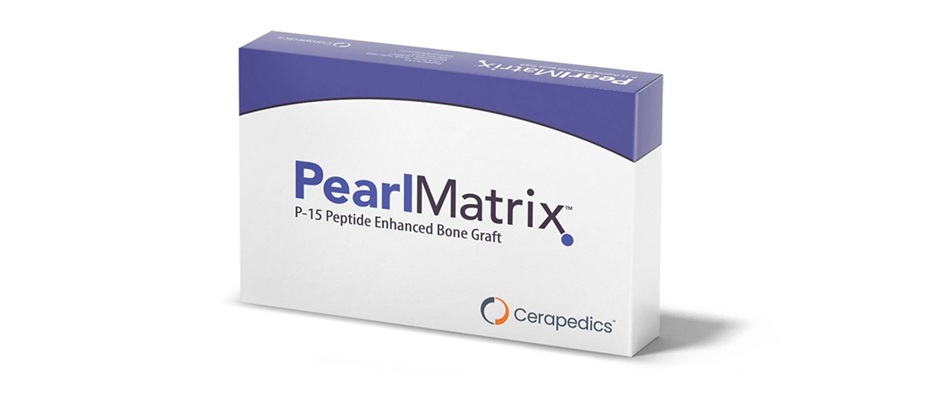
PearlMatrix P-15 Peptide Enhanced Bone Graft is the first and only bone growth accelerator proven to accelerate lumbar fusion with demonstrated statistically superior fusion speed in single-level TLIF procedures. P-15 Peptide, the active component of PearlMatrix, provides a distinct and proven mechanism of action to attach and activate osteogenic cells to accelerate new bone formation. P-15 Peptide is a 15 amino-acid sequence found naturally in Type-1 collagen, the predominant protein in bone. It serves a crucial role in the bone regeneration process as a powerful cell attachment factor. Cerapedics’ pharmaceutically manufactured P-15 Peptide is bound onto calcium phosphate particles, creating a P-15-enhanced scaffold that provides an abundance of attachment sites for osteogenic, bone-forming, cells. Cell attachment activates pathways that release cell-signaling growth factors and allow bone growth through natural cellular processes.
Indications for Use
PearlMatrix™ Bone Graft is indicated for intervertebral body fusion of the spine in skeletally mature patients. PearlMatrix is intended to be used in conjunction with a PEEK TLIF Fusion Device and supplemental internal spinal fixation systems cleared by the FDA for use in the lumbosacral spine. The system is to be used in patients who have had at least six months of non-operative treatment. PearlMatrix is intended for use at one level in the lumbar spine (L2-S1) for the treatment of degenerative disc disease (DDD) with up to Grade I spondylolisthesis. DDD is defined as back and/or radicular pain of discogenic origin with degeneration of the disc confirmed by history, physical exam, and radiographic studies.
PearlMatrix should not be used in situations where there is an absence of load-bearing structural support at the graft site, sensitivity to components or the product, active infection at the operative site, or operative site subject to excessive impact or stress.
Care should be exercised in treating individuals with preexisting conditions that may affect the success of the surgical procedure such as individuals with bleeding disorders of any etiology, long-term steroidal therapy, immunosuppressive therapy or high dosage radiation therapy. The effect of PearlMatrix on pregnant or nursing patients has not been evaluated. PearlMatrix in a TLIF procedure was associated with a higher rate of secondary surgical interventions compared to local autograft.
PearlMatrix should only be used by physicians who are experienced with TLIF procedure and in surgical procedures where it can be adequately contained at the bony void or defect.
To learn more about PearlMatrix, its indications, contraindications, warnings, precautions and potential adverse events, visit our website at www.cerapedics.com or refer to the PearlMatrix Instructions for Use for complete safety and risk information.
About Cerapedics
Cerapedics is a global, commercial-stage orthopedics company that is dedicated to redefining the path to bone repair by healing bones faster and at higher rates, so all patients can get back to living their fullest lives. Bone grafts, including Cerapedics’ products, are used in over four million annual spine, orthopedics, trauma, and interventional procedures worldwide. Cerapedics has two drug-device products approved by the FDA powered by Cerapedics’ proprietary P-15 Osteogenic Cell Binding Peptide: PearlMatrix™ Bone Graft for single-level transforaminal lumbar interbody fusion (TLIF) in the lumbar spine and i-FACTOR® Bone Graft for single-level anterior cervical discectomy and fusion (ACDF) in the cervical spine. Cerapedics is headquartered in Westminster, CO.
For more information, visit us at www.cerapedics.com and follow us on LinkedIn.
Media contact: FleishmanHillard
fh-cerapedics@fleishman.com
SOURCE Cerapedics Inc.