




Source: Florida Atlantic University, September 17, 2022
Nearly 3 in 10 adults in the United States have experienced lower back pain in any three-month period, making it the most common musculoskeletal pain. Back pain remains one of the leading causes of disability worldwide, affecting millions and often leading to chronic discomfort, missed work and invasive procedures.
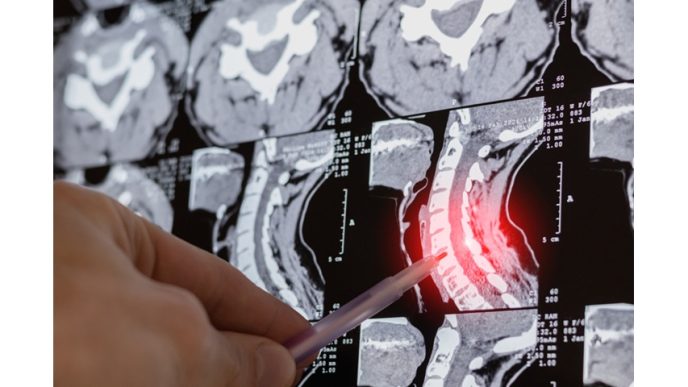
Researchers and clinicians are increasingly turning to lumbar spine modeling, which bridges engineering and medicine, creating a virtual, patient-specific model of the lower back. This technology simulates how the spine moves, where mechanical stress builds up, and what might be causing pain or dysfunction.
These detailed models are used to plan surgeries, evaluate spinal implants and develop personalized treatment strategies tailored to each patient’s anatomy. Despite its promise, current lumbar spine modeling is slow, manual and demands specialized expertise, limiting scalability and personalization. This hinders clinical application and results in inconsistent outcomes.
Researchers from the College of Engineering and Computer Science at Florida Atlantic University and the Marcus Neuroscience Institute at Boca Raton Regional Hospital, part of Baptist Health, have reached a major milestone in lumbar spine modeling by integrating artificial intelligence with biomechanics to transform spine diagnostics and personalized treatment planning.
They are the first to create a fully automated finite element analysis pipeline specifically for lumbar spine modeling. Their breakthrough involves integrating deep learning tools like nnUNet and MONAI with biomechanical simulators such as GIBBON and FEBio.