


Photo: Journal of Orthopaedic Experience & Innovation
Dainn Woo, MD, Bijan Dehghani, MD, Rown Parola, MD, James Stannard, MD, Caleb Bischoff, DO, Brett Crist, MD, Matthew Gardner, MD, Derek Donegan, MD, Samir Mehta, MD
Research ArticleVol. 6, Issue 2, 2025 – September 14, 2025 –
Abstract
Purpose
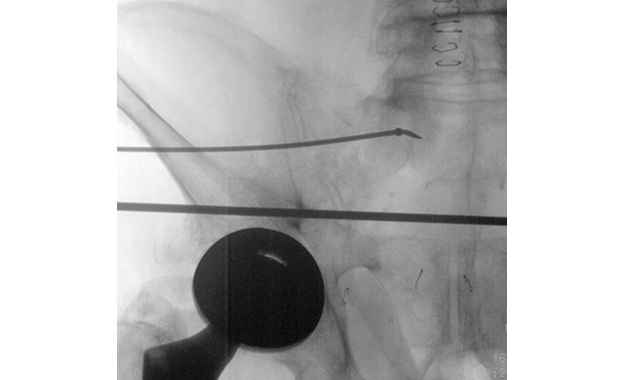
The goals of operative stabilization for pelvic ring injuries include restoration of the bony anatomy, early mobilization, and resuscitation. Percutaneous screw fixation of pelvic fractures can be challenging due to variability in pelvic morphology. Recent advances in surgical technique and implants offer flexible implants to traverse the non-linear osseous fixation paths in the pelvis, which can then be made rigid by activating a locking mechanism. In this study we describe the indications, perioperative and postoperative outcomes, and complications in a series of patients with pelvic ring and acetabular fractures treated with a flexible implant.
Methods
A retrospective review of patients at three Level 1 trauma centers treated with flexible intramedullary fixation for pelvic ring and acetabular fractures was performed. Patient demographics, mechanism of injury, fracture pattern, associated injuries, operative time, blood loss, perioperative complications, post-hospitalization disposition, and weightbearing status were recorded.
Results
111 patients from three Level 1 trauma centers were included, 99 patients followed up in clinic. Follow-up periods ranged from 10 to 126 weeks. Mean age at surgery was 64.8 years (range 21-101). 67 patients were female (60.5%). 81.1% of patients were white, 8.1% black, and 12 declined to respond. 60 (54.1%) pelvic fractures resulted from a low energy mechanism and 51 (45.9%) from a high energy mechanism. 47 (42.3%) patients had additional injuries. The most common injury patterns were LC1 (25%) and LC2 (23%). Operative time ranged from 22 to 403 minutes, averaging 101.5 minutes. Mean EBL was 151ccs. Mean length of stay was 11 days. 90 (81.1%) patients were made weightbearing as tolerated postoperatively. 34% of patients were discharged home, 65% to inpatient rehab. There were 4 intraoperative (2 mal-positioned implants, 1 broken implant, 1 bladder rupture) and 6 postoperative complications (2 nerve palsies, 1 wound breakdown, 2 infections, 1 nonunion). 51 (45.9%) patients were walking unassisted, 11 (9.9%) with a cane, and 29 (26.1%) with a walker at their last follow-up.
Conclusion
Patients treated with flexible intraosseous fixation for pelvic ring and acetabular fractures had less than a 10% complication rate across three Level 1 trauma centers. Immediate full weight bearing in these complex injury patterns is safe with limited concern for implant failure or need for revision surgery when utilizing a flexible implant following the patient’s osseous fixation pathways.
Introduction
Fractures of the pelvic ring are a relatively common injury, accounting for about 2%-8% of all fractures (Grotz et al. 2005; Hu et al. 2023; Buller, Best, and Quinnan 2016; Pohlemann et al. 1996). These injuries may result from high-energy mechanism such as motor vehicle accidents or may present as insufficiency injuries in the setting of low energy mechanisms in the elderly and osteoporotic population (Hu et al. 2023; Bishop and Routt 2012). When indicated for operative stabilization, the primary goal for management of unstable pelvic ring injuries is early mobilization with minimal iatrogenic insult to the soft tissue (Bishop and Routt 2012).